
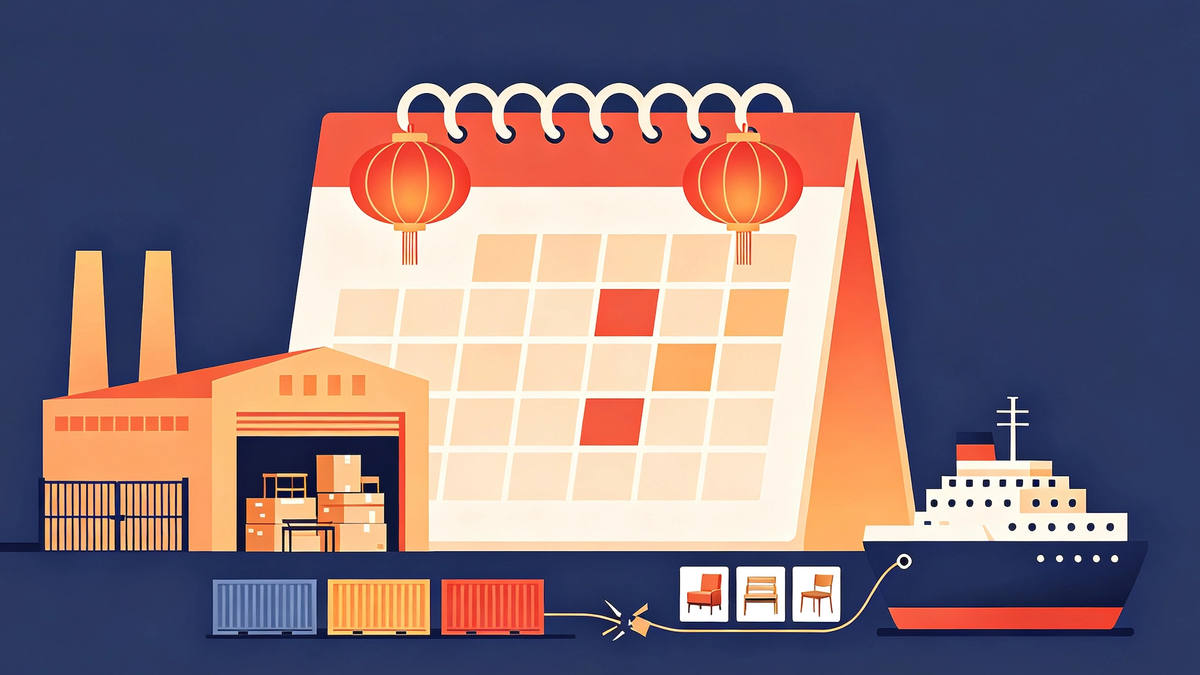
What Actually Happens During Chinese New Year
Chinese New Year falls on a different date each year because it follows the lunar calendar. In 2026, it falls on February 17. In 2027, it will be February 6. The exact date changes, but the disruption follows the same pattern every year.
Here is the timeline of what actually happens on the ground:
Period | What Happens | Impact on Your Order |
|---|---|---|
2-3 weeks before CNY | Factories rush to finish existing orders before the holiday | Rush jobs mean lower quality. QC gets skipped. Mistakes multiply. |
1 week before CNY | Workers start leaving. Many factories are technically "open" but understaffed | Production slows to a crawl. Nobody is answering WeChat. |
CNY week (7 days) | Official public holiday. Most factories completely closed | Zero production. Zero communication. |
1-2 weeks after CNY | Workers gradually return, but not all of them | Factories operate at 50-70% capacity. New workers need training. |
3-4 weeks after CNY | Production slowly returns to normal | Backlog of orders means your order is in a queue behind everyone else's |
The total disruption window is not 7 days. It is 5 to 6 weeks from the time the pre-CNY rush starts to the time production returns to normal capacity.
Key insight: The official holiday is 7 days. The real disruption is 6 weeks. Most first-time buyers only plan for the 7 days and get caught off guard by the rest.
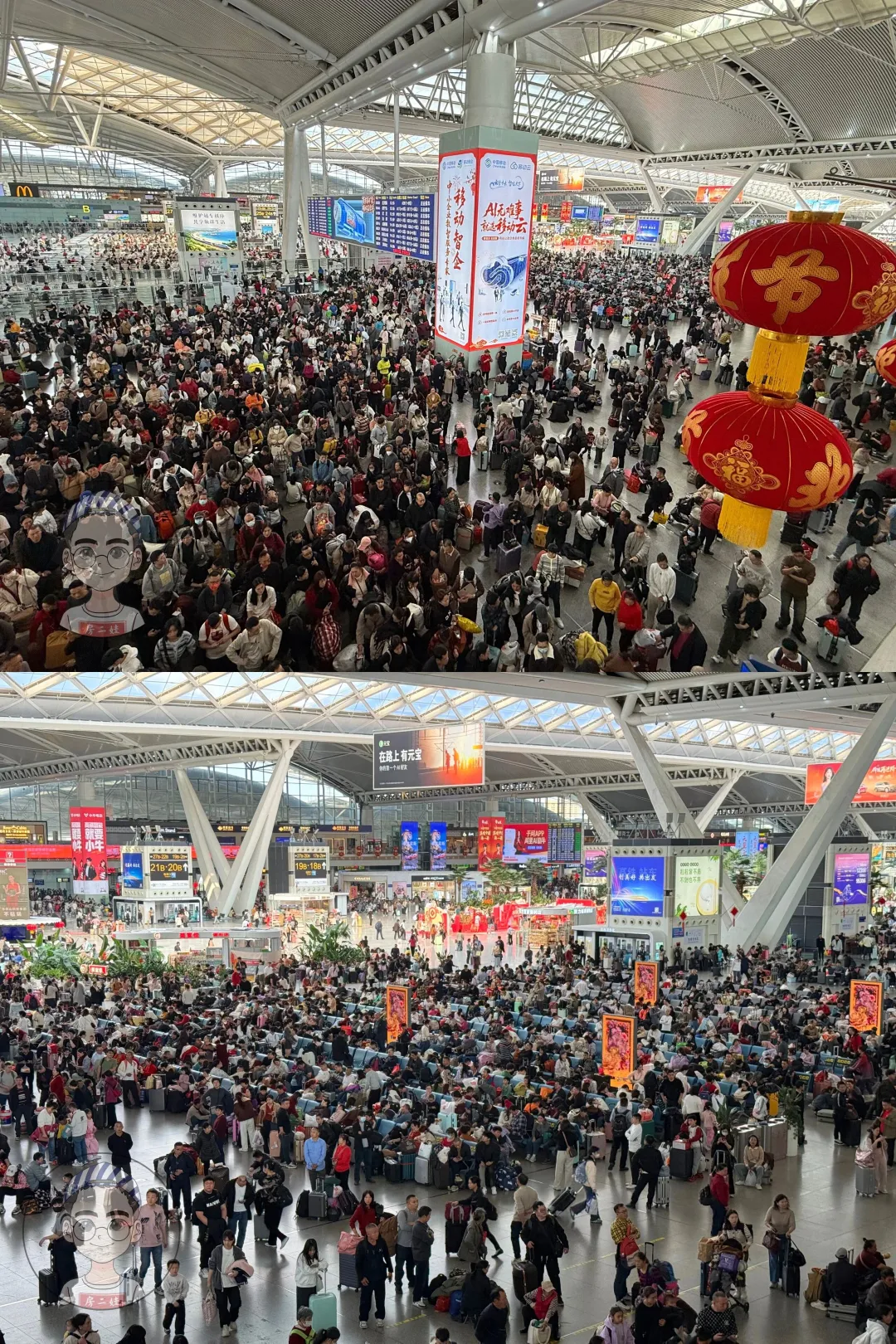
Millions of factory workers travel home for family reunion during Chinese New Year, resulting in labour shortages and suspended furniture production for weeks.
The Domino Effect on Your Production Timeline
The problem with Chinese New Year is not just the shutdown itself. It is the domino effect it creates across every stage of your order. Let me walk you through how a January order actually plays out.
The Pre-CNY Rush (January)
When you place an order in January, the factory will tell you they can finish it before the holiday. They probably cannot. What happens instead is that every factory in China is trying to finish every order before CNY, which means:
- Material suppliers are overwhelmed and prioritizing larger customers
- Your order may get bumped behind a bigger client's order
- Workers are working overtime, which means more quality issues
- The factory may tell you the order is "almost done" when it is not, just to keep you calm
If your order is not finished and shipped before CNY, it sits in the factory warehouse for 2-3 weeks. Nobody is touching it. Nobody is packing it. It just sits there.
The Post-CNY Backlog (February to March)
When workers come back, the factory faces a massive backlog. Every order that was supposed to ship during CNY is now waiting. Every order that was placed in January and promised for February is also waiting. The factory's production schedule looks like a traffic jam.
Here is what this means for you:
- Your order that was supposed to take 35 days now takes 50-60 days
- The factory prioritizes larger clients and long-term partners first
- New workers (replacements for those who did not return) are learning on the job, which means quality drops
- Getting updates from the factory is nearly impossible because the sales manager is fighting 30 different fires
The Worker Return Rate Problem
This is the part nobody tells you. After Chinese New Year, not all workers come back. Furniture factory workers in China are often migrant workers from inland provinces. After going home for the holiday, some of them decide to stay. They find jobs closer to home, switch industries, or simply do not want to make the trip back to Guangdong or Zhejiang.
A typical furniture factory might lose 15-20% of its workforce after CNY. Those workers need to be replaced, and the new workers need to be trained. Training takes 2-4 weeks. During that time, production speed is slower and quality is inconsistent.
If you are sourcing custom furniture from China, this is especially painful. Custom orders require skilled workers who know the specific techniques. When the skilled upholsterer or finisher does not come back after CNY, your custom order might be handed to a new hire who is still learning.
The Shipping Bottleneck Nobody Warns You About
Even if your furniture is finished and packed, getting it onto a ship is another battle. The weeks after Chinese New Year are the worst time of year for shipping out of China.
Every factory in the country is trying to ship at the same time. Container availability drops sharply. Trucking companies are short on drivers (many drivers also went home for CNY and have not returned). Shipping lines raise rates because demand is through the roof.
Shipping Issue | Before CNY | After CNY | Impact |
|---|---|---|---|
Container availability | Tight but manageable | Severe shortage | You might wait 1-2 weeks just to get a container |
Trucking | Available with notice | 30-50% capacity | No trucks to move your goods to port |
Sea freight rates | Normal | 20-40% higher | Your shipping budget takes a hit |
Port congestion | Moderate | Heavy | Containers sit at port 5-7 days longer than usual |
If you want to understand the baseline shipping costs so you can budget for the CNY premium, our sea freight cost guide breaks down the numbers. The key takeaway: whatever you budget for shipping, add 30% if your order ships in the 4 weeks after CNY.
Quality Control Gets Harder, Not Easier
Here is something that catches many buyers off guard. The post-CNY period is one of the worst times for quality. The combination of new workers, rushed production, and accumulated backlog creates a perfect storm for quality issues.
I have seen defect rates double in the 4-6 weeks after CNY. The most common problems:
- Inconsistent finishes - new sprayers who have not calibrated their technique
- Joinery failures - new assembly workers who do not understand tolerances yet
- Upholstery defects - new sewing operators with uneven stitching
- Wrong materials - rush purchasing means substituting materials when the right one is out of stock
This is why post-CNY pre-shipment inspections are non-negotiable. If your order is being produced in February or March, you need someone on the ground checking quality before it ships. The factory will not catch these issues themselves - they are too busy trying to clear the backlog.
How to Plan Around Chinese New Year
The good news is that CNY is entirely predictable. The date is announced months in advance. The disruption pattern is the same every year. If you plan ahead, you can avoid the worst of it. Here is my framework for CNY-proofing your orders:
Rule 1: Ship Before CNY or Ship After mid-March
If your order can be finished and shipped before the pre-CNY rush (typically 2 weeks before the holiday), do it. If not, do not try to squeeze it in during the rush. Accept that the order will ship after CNY and plan for a late March or early April shipment.
Rule 2: Place Orders by Early December for February Delivery
If you need furniture delivered by late February or early March, you need to place your order by early December at the latest. This gives the factory enough time to produce, inspect, and ship before the pre-CNY rush. Orders placed in January for February delivery are the ones that get stuck.
Rule 3: Avoid Sampling During CNY
If you need samples approved before placing a production order, do not start the sampling process in January. The sample workshop will be overloaded with rush production orders, and your sample quality will not represent the actual production quality. Start sampling in November or wait until March.
Rule 4: Lock In Shipping Early
If you know your order will ship after CNY, book your container and trucking 3-4 weeks in advance. Do not wait until the goods are ready to book shipping. By then, every other factory in China is also trying to book, and you will be at the back of the line. A sourcing partner with logistics capabilities can help you lock in shipping slots early.
Rule 5: Budget for the CNY Premium
Accept that anything shipping in the 4 weeks after CNY will cost more. Factor in 20-30% higher sea freight rates, potential demurrage charges at port, and the cost of a quality inspection that you would not otherwise need. Build this into your project budget from the start.
Timing | Risk Level | Recommendation |
|---|---|---|
Order placed Nov, ship before CNY | Low | Ideal scenario. Do this if possible. |
Order placed Dec, ship during CNY rush | Medium | Tight timeline. Emphasize quality checks. |
Order placed Jan, ship after CNY | High | Expect 50-60 day production, higher shipping, lower quality. Budget accordingly. |
Order placed during CNY | Very High | Factory may not even acknowledge your order for 2 weeks. Avoid if possible. |
The CNY Calendar for the Next Three Years
Here are the dates you need to plan around. Mark these in your project calendar now:
Year | CNY Date | Pre-Rush Starts | Full Shutdown | Back to Normal |
|---|---|---|---|---|
2027 | February 6 | ~Jan 20 | Feb 5-19 | ~Mar 10 |
2028 | January 26 | ~Jan 10 | Jan 25-Feb 8 | ~Feb 25 |
2029 | February 13 | ~Jan 28 | Feb 12-26 | ~Mar 15 |
Note: The "Back to Normal" date assumes 3-4 weeks for worker return and backlog clearance. For custom or complex orders, add another 1-2 weeks.
Frequently Asked Questions
How long do Chinese furniture factories shut down for Chinese New Year?
The official public holiday is 7 days, but most furniture factories close for 2-3 weeks. Many factories give workers 10-14 days off, and some smaller factories close for up to 3 weeks. The real disruption, however, is 5-6 weeks when you factor in the pre-CNY rush and the post-CNY backlog.
Can I place an order during Chinese New Year?
You can send inquiries, but do not expect a response. Most factory sales managers are also on holiday. Even if you reach someone, production cannot start until workers return. It is better to finalize orders before the pre-CNY rush or wait until after workers are back.
Does Chinese New Year affect all factories equally?
No. Large factories with stable workforces tend to recover faster. Small factories and those with high worker turnover are hit harder. Factories in coastal provinces (Guangdong, Zhejiang) are more affected than those in inland provinces because they rely more on migrant labor. If you want to understand which manufacturing regions are most affected, our guide to China's furniture cities provides regional context.
What if my order is already in production when CNY hits?
If production is underway but not finished, the partially completed goods will sit in the factory until workers return. This is generally safe - unfinished furniture does not degrade in 2-3 weeks. However, if the furniture is mid-finish (paint is drying but not cured), there can be issues with dust settling on tacky surfaces. Ask your factory about their CNY storage plan.
Is there a best time of year to start sourcing from China?
The best time to start a new sourcing project is September through November. Orders placed during this window can typically be produced and shipped before the pre-CNY rush. March through May is the second-best window, after workers have returned and production has normalized. The worst time is January, when you are fighting the pre-CNY rush.
How much extra should I budget for CNY-related costs?
If your order ships in the 4 weeks after CNY, budget an additional 20-30% for sea freight, plus the cost of a mandatory pre-shipment inspection. If your timeline slips and your hotel or restaurant opening is delayed, the indirect costs of delay (penalty clauses, lost revenue) can be far higher than the direct shipping premium.