
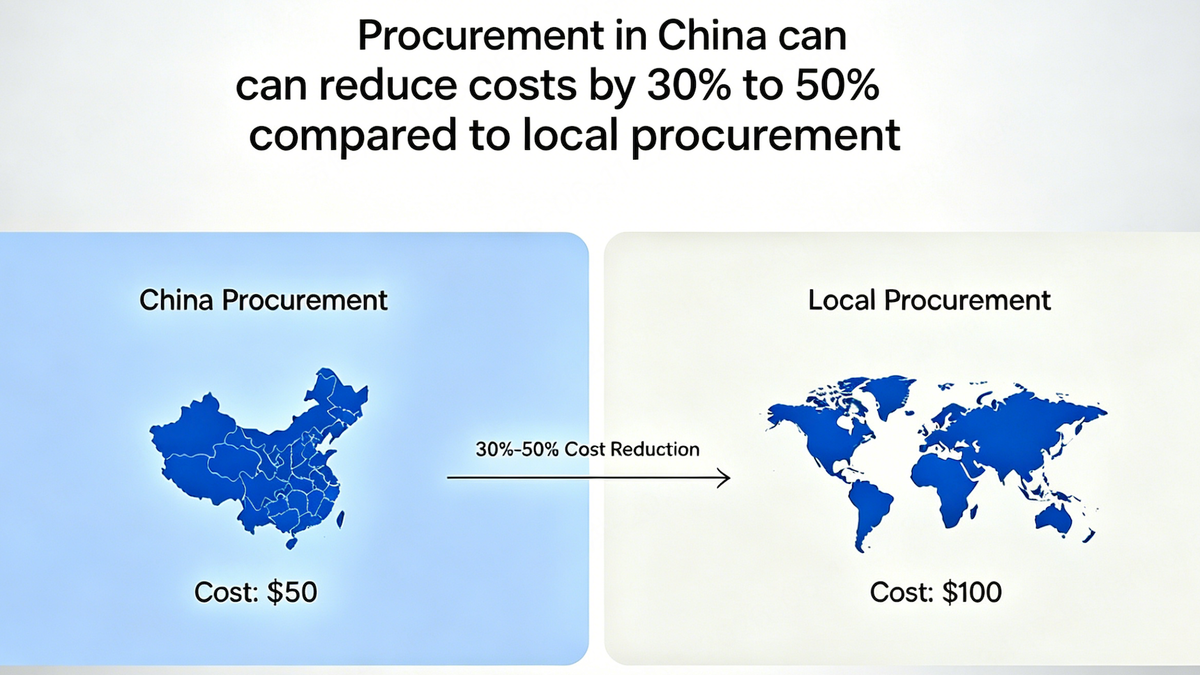
What Is FF&E and Why Source It from China?
FF&E stands for Furniture, Fixtures & Equipment. In commercial projects, it covers everything that makes a space functional and branded:
- Furniture: guest room sets, lobby seating, restaurant tables, office workstations
- Fixtures: lighting, built-in cabinetry, decorative elements
- Equipment: appliances, AV systems, safety fixtures
China is the world's largest furniture manufacturer, accounting for over 40% of global production. Key advantages of sourcing FF&E from China include:
- Cost efficiency: Factory-direct pricing without middlemen markups
- Customization: OEM and ODM capabilities for branded projects
- Scale: Ability to handle large-volume orders for multi-location rollouts
- Variety: Access to specialized clusters — Foshan for hotel furniture, Zhongshan for lighting, Hangzhou for office furniture
Step 1: Define Your FF&E Requirements
Before contacting any supplier, document exactly what you need. This step prevents costly revisions later.
Create a Detailed Specification List
For each item category, record:
Specification | Details to Include |
|---|---|
Product type | e.g., queen bed frame, bar stool, conference table |
Dimensions | Exact measurements in mm or inches |
Materials | Solid wood, plywood, MDF, metal, upholstery fabric |
Finish | Paint color, veneer type, fabric grade |
Quantity | Per item and per project phase |
Quality standard | Commercial grade, fire-retardant requirements, certifications |
Budget range | Target FOB price per unit |
Delivery timeline | Production lead time + shipping duration |
Organize by Room or Zone
For hotel projects, group FF&E by:
- Guest rooms (beds, nightstands, wardrobes, desks)
- Lobby and public areas (sofas, reception desks, lighting)
- Food & beverage (dining tables, chairs, bar counters)
- Back-of-house (staff furniture, storage)
For office projects, group by:
- Workstations and desks
- Meeting and conference rooms
- Breakout and lounge areas
- Reception and waiting areas
Step 2: Find the Right Suppliers
China's furniture industry is clustered by region. Knowing where to look saves weeks of search time.
Major Furniture Manufacturing Clusters in China
Region | Specialization | Best For |
|---|---|---|
Foshan, Guangdong | Premium sofas, beds, hotel furniture | Hospitality FF&E, custom furnishing |
Zhongshan, Guangdong | Decorative lighting, LED lamps | Hotel lighting, commercial fixtures |
Hangzhou & Chengdu | Modern office furniture | Workspace furniture, ergonomic chairs |
Zhejiang & Fujian | Outdoor rattan, wicker furniture | Patio and resort furniture |
Dongguan, Guangdong | Metal furniture, hardware | Industrial-style furniture, frames |
How to Find Suppliers
- Online platforms: Alibaba, Made-in-China, Global Sources
- Trade shows: Canton Fair (April/October), CIFF (March/September in Guangzhou)
- Factory directories: Industry association listings
- Sourcing agents: Local agents with pre-verified factory networks
Pro tip: A reliable China FF&E sourcing agent can pre-screen factories, saving you from visiting 20+ suppliers to find 3 qualified ones.
Step 3: Verify Supplier Capabilities
Not every factory that looks good online can deliver. Verification is critical.
Factory Audit Checklist
Area | What to Check |
|---|---|
Production capacity | Can they handle your volume? What's their monthly output? |
Quality control | Do they have in-line inspection? Final random inspection? |
Certifications | ISO 9001, FSC, BIFMA, fire-retardant certificates |
Export experience | Have they shipped to your country before? |
Customization ability | Can they produce from your drawings or samples? |
Financial stability | How long have they been in business? |
Red Flags to Watch For
- Refuses factory visit or video call
- Quotes significantly below market rate (usually means corner-cutting)
- No export experience to Western markets
- Cannot provide material certifications
- Pressure for 100% payment upfront
Step 4: Request Samples and Compare Quotes
Never place a bulk order without approving samples first.
Sample Request Process
- Send detailed specifications with drawings or reference images
- Request 2-3 samples from shortlisted suppliers
- Evaluate on: material quality, craftsmanship, color accuracy, packaging
- Document differences between samples for negotiation
Quote Comparison Framework
Factor | Weight | Notes |
|---|---|---|
Unit price | 30% | FOB price, not just product cost |
Sample quality | 25% | Best predictor of bulk quality |
Lead time | 15% | Can they meet your project schedule? |
MOQ flexibility | 15% | Will they accommodate smaller test orders? |
Communication | 15% | Response speed, English proficiency, transparency |
Important: The cheapest quote is rarely the best. A 10% higher price from a reliable factory often saves 30% in rework and delays.
Step 5: Negotiate Terms and Place Your Order
Key Contract Terms to Negotiate
Term | Typical Range | Your Target |
|---|---|---|
Payment | 30% deposit, 70% before shipment | 30% deposit, 70% after inspection |
Lead time | 45–60 days | Lock in writing with penalty clauses |
Quality standard | AQL 2.5 | Specify defect classification |
Packaging | Standard export carton | Custom crating for fragile items |
Warranty | 1 year | 2+ years for commercial use |
Order Documentation
Ensure you receive and verify:
- Proforma Invoice (PI) with exact specifications
- Production timeline with milestones
- Material approval samples (sealed and signed)
- Quality control plan
Step 6: Monitor Production and Quality Control
This is where most first-time buyers lose control. Active monitoring prevents surprises.
Production Monitoring Timeline
Stage | Action | Timing |
|---|---|---|
Pre-production | Verify raw materials match approved samples | Before cutting |
In-line inspection | Check dimensions, structure, surface finish | 20–30% into production |
Pre-shipment inspection | Full random inspection against AQL standard | When 80–100% complete |
Container loading | Supervise loading, verify quantities | Day of shipment |
Quality Control Standards
- AQL 2.5: Standard for commercial furniture (max 2.5% defect rate)
- AQL 1.0: Stricter standard for high-end hospitality projects
- Key checks: Dimensions, color consistency, structural integrity, surface finish, packaging
Learn more: Read our detailed guide on Quality Control & Inspection Services for furniture sourced from China.
Step 7: Handle Shipping and Customs
Shipping Options for FF&E
Method | Transit Time | Best For | Cost |
|---|---|---|---|
Sea freight (FCL) | 25–40 days | Large orders (20ft/40ft container) | Lowest per unit |
Sea freight (LCL) | 30–50 days | Smaller orders sharing container | Moderate |
Air freight | 5–10 days | Urgent samples or small high-value items | Highest |
Rail freight | 18–25 days | Europe-bound orders | Mid-range |
Customs Documentation
Your supplier or freight forwarder should prepare:
- Commercial Invoice
- Packing List
- Bill of Lading (B/L)
- Certificate of Origin
- Material certifications (if required)
For a detailed breakdown of 2026 freight rates and budgeting formulas, see our sea freight cost guide.
Pro tip: Work with a logistics partner experienced in furniture shipping. They know how to handle customs clearance and avoid costly delays.
Common Mistakes to Avoid
Mistake | Why It Hurts | How to Avoid |
|---|---|---|
Skipping sample approval | Bulk order does not match expectations | Always approve sealed samples |
Choosing cheapest quote | Poor quality, delays, hidden costs | Evaluate total value, not just price |
No quality inspection | Defective goods arrive at your warehouse | Hire third-party QC or use agent |
Vague specifications | Suppliers interpret requirements differently | Document every detail in writing |
Ignoring packaging | Damaged goods during transit | Specify export-grade packaging |
Poor communication | Misunderstandings, wrong products | Use clear English, confirm in writing |
When to Use a China FF&E Sourcing Agent
You can manage the process yourself — but a professional sourcing agent adds value when:
- You are sourcing for the first time from China
- Your order is complex (multiple product categories, custom designs)
- You need quality assurance but cannot visit factories personally
- Your project has a tight timeline that cannot afford delays
- You want competitive pricing through factory-direct relationships
A good agent handles supplier verification, sample management, production monitoring, quality control, and logistics coordination — letting you focus on your project, not chasing suppliers.
Frequently Asked Questions
How long does it take to source FF&E from China?
A typical timeline is 8–12 weeks from initial inquiry to delivery: 1–2 weeks for supplier shortlisting and sampling, 2–3 weeks for sample approval and order placement, 4–6 weeks for production, and 3–5 weeks for sea freight shipping.
What is the minimum order quantity (MOQ) for Chinese furniture factories?
MOQs vary by factory and product. Standard MOQs are 50–100 units per item for off-the-shelf designs. Custom designs may require 200+ units. Some factories accept smaller trial orders at slightly higher per-unit prices.
How much can I save by sourcing FF&E from China?
Buyers typically save 30–50% compared to purchasing from domestic or regional suppliers. Savings come from lower manufacturing costs, direct factory relationships, and competitive material pricing. For large projects, savings can reach hundreds of thousands of dollars.
Do Chinese factories accept custom designs?
Yes. Most established factories offer OEM (produce your design) and ODM (modify their existing designs) services. You provide technical drawings, material specifications, and reference samples. The factory produces prototypes for approval before bulk production.
What certifications should I look for in a furniture supplier?
Key certifications include: ISO 9001 (quality management), FSC (sustainable wood sourcing), BIFMA (office furniture standards), CAL 117 / BS 5852 (fire retardancy for upholstery), and CE / UL (electrical fixtures). Requirements vary by project type and local regulations.
How do I handle quality issues if goods arrive defective?
Prevention is key: use pre-shipment inspection to catch defects before shipment. If issues still arise, your contract should specify remediation terms — rework, replacement, or refund. Working with a experienced in hospitality FF&E provides additional accountability, as they maintain ongoing relationships with factories.
Ready to Start Your FF&E Sourcing Project?
Sourcing FF&E from China offers significant cost advantages — but success depends on preparation, verification, and active management. Whether you are furnishing a boutique hotel, a restaurant chain, or a corporate headquarters, following the steps in this guide will help you avoid common pitfalls and achieve quality results.
Need expert support? At sourcingchn, we specialize in end-to-end FF&E sourcing for hospitality, commercial, and workspace projects. From factory matching to quality control and delivery, we manage the entire process so you do not have to.