
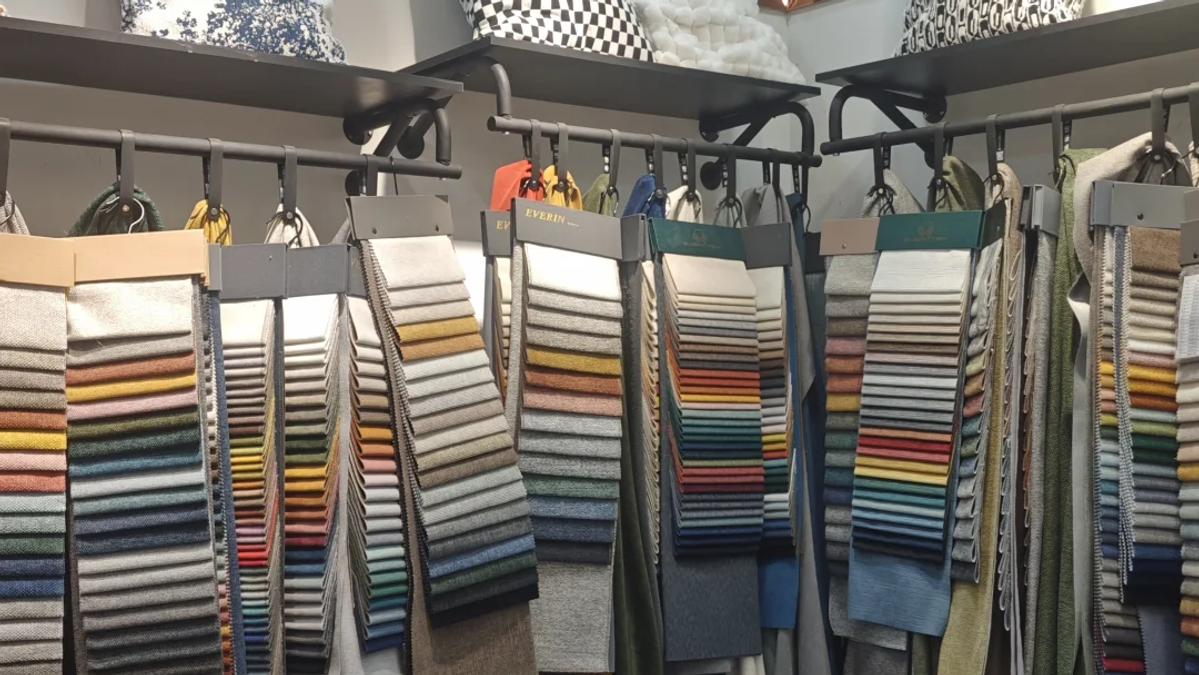
Why Fabric Choice Matters in Commercial Settings
In a commercial environment, worn upholstery is a brand liability. A frayed armrest in a hotel lobby or a stained booth in a restaurant undermines the perception of the entire establishment. Commercial upholstery must withstand four challenges that residential fabrics rarely face:
- Constant wear and tear: Hotel lobby chairs may be occupied 10–14 hours per day. The fabric must resist abrasion without pilling or tearing.
- Brand consistency: Multi-site operators need fabrics that perform identically across hundreds of units. Uneven fading creates a visually inconsistent brand experience.
- Regulatory compliance: Fire safety codes for commercial furniture are stricter than residential codes in virtually every market. Specifying a fabric without the correct fire certification can result in failed inspections and legal liability.
- Guest perception and hygiene: Visibly clean upholstery is a baseline expectation. Fabrics that stain easily or cannot withstand frequent cleaning become a maintenance burden and a reputational risk.
The cost of getting fabric wrong extends beyond the material — reupholstering 200 dining chairs mid-warranty can cost 3–5 times the original fabric budget.
Key Performance Metrics for Upholstery Fabrics
When suppliers and specifiers talk about fabric performance, they reference standardized tests. Understanding these metrics lets you compare fabrics objectively.
Martindale Abrasion Test
The Martindale test is the international standard for fabric abrasion resistance, widely used in Europe, Asia, and global hospitality procurement. A machine rubs the fabric with a standard abrasive pad in a circular motion until visible wear or yarn breakage occurs.
Martindale Rating | Classification | Typical Application |
|---|---|---|
Below 10,000 | Light domestic | Occasional residential use, decorative accents |
10,000–15,000 | General domestic | Residential sofas, light home use |
15,000–25,000 | Light commercial | Low-traffic commercial, executive offices, hotel bedrooms |
25,000–30,000 | General commercial | Restaurant seating, office chairs, hotel public areas |
30,000–50,000 | Heavy commercial | High-traffic hospitality, bar stools, lobby seating |
50,000+ | Heavy contract / hospitality | 24/7 environments, airports, transit, heavy-use hospitality |
For most commercial applications, Martindale 25,000+ is the minimum. For high-traffic hospitality — hotel lobbies, restaurant dining rooms, bar areas — specify 50,000+ rubs.
Wyzenbeek Test
The Wyzenbeek test is the North American equivalent. The machine rubs the fabric back and forth in a straight line using a cotton duck or wire screen abrasive, with results expressed in "double rubs."
Wyzenbeek Double Rubs | Classification | Typical Application |
|---|---|---|
Below 15,000 | Light duty | Residential upholstery |
15,000–30,000 | Medium duty | Light commercial, office, hotel guest rooms |
30,000–50,000 | Heavy duty | General commercial, restaurant, public areas |
50,000+ | Extra heavy duty | High-traffic hospitality, 24/7 use |
The two tests are not directly interchangeable — a 50,000 Martindale fabric may not achieve 50,000 Wyzenbeek double rubs. Specify the test that matches your destination market: Wyzenbeek for the US, Martindale for Europe, Asia, and most international markets.
Colorfastness and Pilling Resistance
Three colorfastness properties matter for commercial upholstery. Colorfastness to light (ISO 105-B02, rated 1–8) should achieve grade 5+ to prevent fading. Colorfastness to rubbing (ISO 105-X12, rated 1–5) needs grade 4+ to prevent color transfer. Colorfastness to cleaning (ISO 105-C06) determines whether the fabric fades with each professional cleaning cycle. Pilling resistance — rated via ISO 12945-2 on a scale of 1–5 — should be grade 4+. Synthetic fibers generally outperform natural blends in pilling resistance.
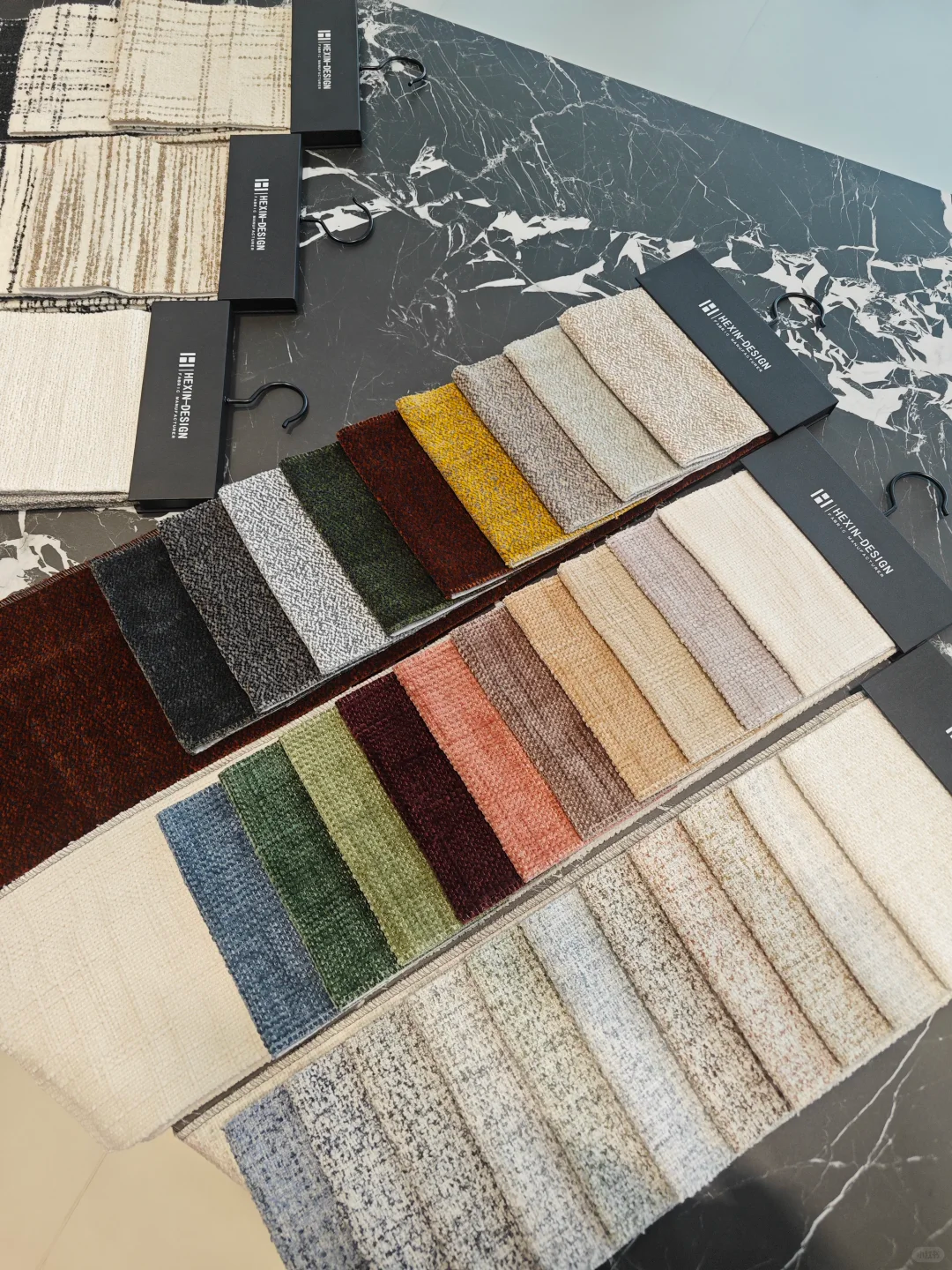
Commercial Upholstery Fabric Types Compared
The fiber content determines durability, cleanability, fire performance, cost, and aesthetic character.
Fabric Type | Durability (Martindale) | Cleanability | Cost (per yard) | Fire Rating | Best Use Case |
|---|---|---|---|---|---|
Polyester | 25,000–50,000+ | Good — stain treatments available | $6–$18 | Treated FR available | Hotel guest rooms, office seating, general commercial |
Polypropylene / Olefin | 30,000–60,000 | Excellent — inherently stain-resistant | $5–$15 | Inherently FR | Outdoor-adjacent, pool areas, high-traffic public spaces |
Wool | 30,000–50,000+ | Good — resists soil, dry-clean | $25–$60 | Inherently FR | Luxury hospitality, executive offices, high-end restaurants |
Cotton / Linen Blends | 15,000–25,000 | Fair — stains easily | $8–$20 | Requires FR treatment | Boutique settings, decorative accents, low-traffic areas |
Vinyl / PVC | 50,000–100,000+ | Excellent — wipe-clean, waterproof | $8–$25 | Inherently FR (most) | Healthcare, food service, high-spill environments |
PU Faux Leather | 30,000–50,000 | Very good — wipe-clean | $6–$18 | Treated FR available | Restaurant booths, bar stools, mid-range hospitality |
Genuine Leather | 50,000–100,000+ | Good — conditions with care | $30–$80 | Treated FR available | Luxury hospitality, executive seating, premium restaurants |
Polyester dominates the commercial market due to its balance of durability, affordability, and versatility. Solution-dyed polyester offers excellent colorfastness and accepts stain-resistant and fire-retardant treatments, making it the default for hotel guest room sofas, office chairs, and mid-range restaurant seating. Polypropylene (olefin) is inherently stain-resistant and fire-retardant, ideal for environments where spills and fire codes are both concerns. It resists chlorine bleach but has a lower melting point than polyester.
Wool is the gold standard for luxury commercial upholstery — naturally fire-resistant, soil-resistant, and durable for decades. The trade-off is cost: wool is 3–5 times more expensive than polyester and requires professional cleaning.
Vinyl/PVC is the workhorse of healthcare and food service — completely waterproof, wipe-clean, and inherently fire-retardant. For restaurant and bar furniture sourcing, vinyl remains the most practical choice for booth seating in high-volume operations. PU faux leather offers a leather look at fabric prices, but typically lasts only 3–5 years in commercial use versus 7–10 years for genuine leather. The surface coating can peel with repeated cleaning. Genuine leather — full-grain or top-grain — develops a patina over time and can last 10–15 years in commercial use, justifying its premium cost in luxury settings.
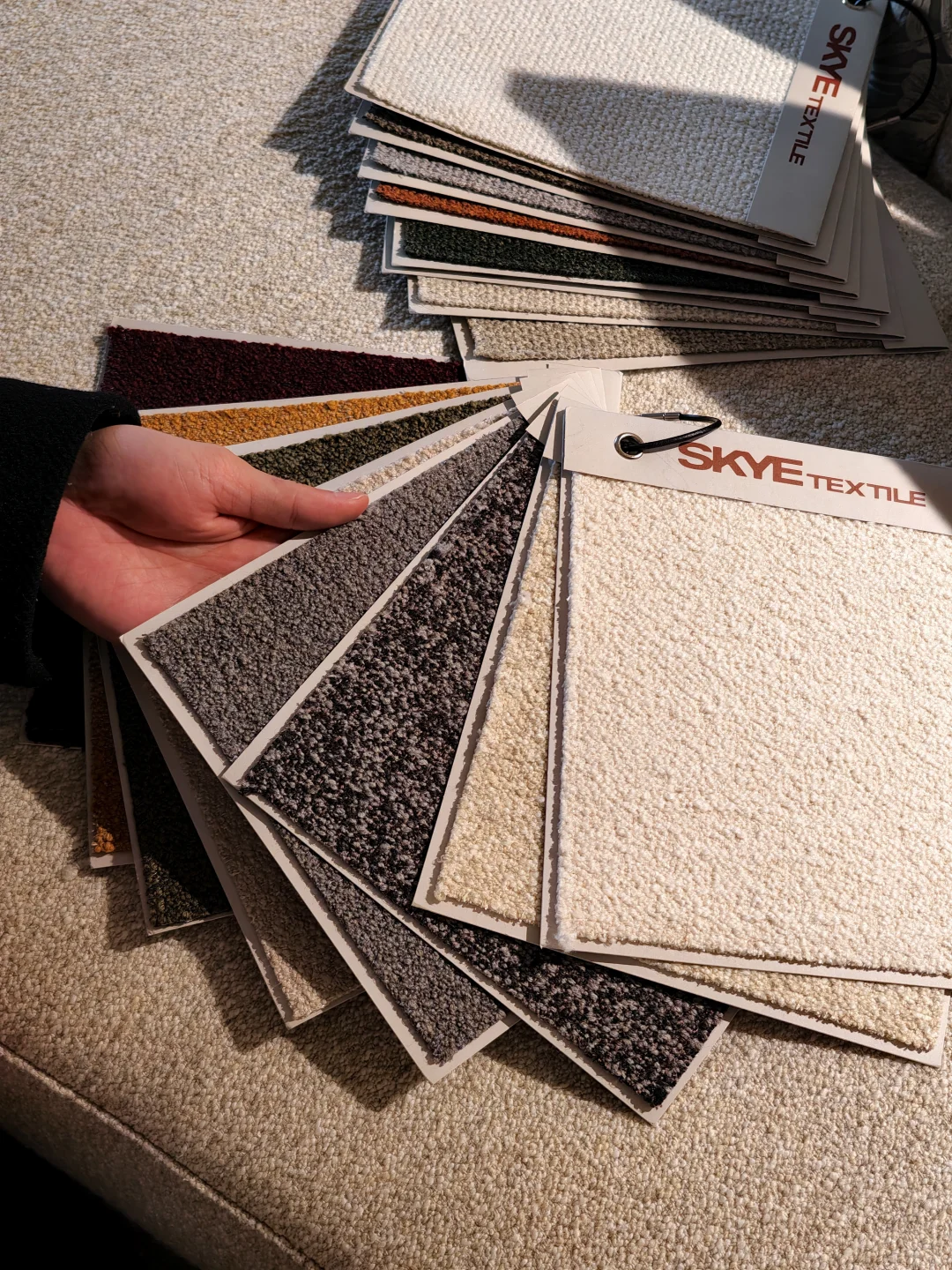
Fire Safety Standards for Commercial Upholstery
Fire safety is non-negotiable in commercial furniture. Specifying the wrong certification can prevent your furniture from passing inspection — or create liability in a fire.
Key Fire Safety Standards at a Glance
Standard | Market | Scope | Key Requirements |
|---|---|---|---|
CAL 117 (TB 117-2013) | USA | Upholstered furniture flammability | Cigarette ignition resistance; foam and fabric must resist smoldering ignition |
CAL 133 (TB 133) | USA (select states) | Seating in public occupancies | Open flame resistance for furniture in public buildings — hotels, restaurants, offices |
BS 5852 | UK | Upholstered furniture ignition | Crib 5 ignition source (butane flame); mandatory for all contract furniture in the UK |
EN 1021-1/2 | European Union | Furniture flammability | Cigarette (Part 1) and match flame (Part 2) ignition resistance |
IMO FTP Code Part 8 | International maritime | Passenger ships | Required for cruise ship and ferry furniture |
CAL 117 is the US baseline, simulating a dropped cigarette on upholstered furniture. Most US-market fabrics meet it, but it is considered a minimum standard. BS 5852 is significantly more demanding — the "Crib 5" test applies a wood crib ignition source equivalent to a significant flame. It is mandatory for all contract furniture in the UK; if sourcing for the UK market, every upholstered piece must carry a BS 5852 Crib 5 certificate. EN 1021 is the European equivalent, testing cigarette and match-flame ignition resistance, with requirements varying by country.
Inherently FR vs. Treated FR
When a supplier says a fabric is "fire retardant," ask which type:
- Inherently FR (IFR): Fire resistance is built into the fiber chemistry and cannot be washed out. Wool, polypropylene, modacrylic, and certain solution-dyed polyesters are inherently FR. These fabrics maintain their rating for the life of the fabric.
- Treated FR: A chemical coating is applied after weaving. It can degrade with repeated cleaning — treated FR fabrics may lose their fire rating after 10–15 professional cleanings.
For long-life installations, inherently FR fabrics are strongly preferred. The 15–25% cost premium is offset by the assurance that the rating will not degrade. Always request the actual fire test certificate and verify it through professional quality control inspection before production begins.
Cleanability and Maintenance
In commercial settings, upholstery is cleaned far more frequently than in residential use — often daily in food service. Cleanability is determined by fiber content, surface treatment, and construction.
Cleanability Codes
Code | Meaning | Recommended Cleaning Method |
|---|---|---|
W | Water-based cleaning only | Water-based upholstery shampoo or mild detergent |
S | Solvent-based cleaning only | Dry-cleaning solvent only; do not use water |
W/S | Water or solvent safe | Either water-based or solvent-based cleaners |
X | Vacuum or brush only | No liquid cleaning; professional cleaning only |
For commercial furniture, W or W/S codes are strongly preferred. Solvent-only fabrics require professional dry-cleaning, which is impractical for high-traffic environments. Code X fabrics should be avoided entirely.
Stain Resistance Treatments
Teflon and Scotchgard treatments add 10–20% to fabric cost and extend time between deep cleanings. Crypton and similar integrated barrier systems embed stain resistance into the fabric construction, adding 25–40% to cost but maintaining effectiveness through repeated cleaning — recommended for food service and healthcare. All stain treatments degrade over time; re-treatment may be needed every 2–3 years in high-traffic environments.
Recommended Maintenance Schedules
Setting | Vacuum | Spot Cleaning | Deep Cleaning |
|---|---|---|---|
Hotel guest room | Weekly | As needed | Quarterly |
Hotel lobby / public area | Daily | Daily | Monthly |
Restaurant dining room | Daily | After each service | Bi-weekly |
Bar / lounge | Daily | Daily | Weekly |
Office | Bi-weekly | As needed | Semi-annually |
Healthcare | Daily | After each patient | Weekly |
Using the wrong cleaning chemical — bleach on a non-bleach-safe fabric, or solvent on a water-only fabric — can void warranties and permanently damage upholstery.
Cost Considerations
Upholstery fabric is priced by the yard (US) or meter (international). Cost varies by fiber content, construction, fire rating, and brand.
Price Ranges by Fabric Type
Fabric Type | Cost per Yard | Notes |
|---|---|---|
Polypropylene / Olefin | $5–$15 | Most economical commercial-grade option |
Polyester | $6–$18 | Best value for general commercial use |
PU Faux Leather | $6–$18 | Leather-look at fabric prices |
Vinyl / PVC | $8–$25 | Premium vinyl with antimicrobial finish at higher end |
Cotton / Linen Blends | $8–$20 | Budget decorative; limited commercial durability |
Wool | $25–$60 | Premium; inherently FR |
Genuine Leather | $30–$80 | Full-grain at higher end; top-grain mid-range |
Fire-rated fabrics cost 15–25% more than non-rated equivalents — a non-negotiable compliance cost. For 500 yards of fabric, this adds approximately $750–$2,500 to the budget.
Yardage Estimation
A standard dining chair needs approximately 1.5–2 yards of fabric. Common requirements:
Furniture Type | Fabric per Unit (yards) | Notes |
|---|---|---|
Dining chair (seat + back) | 1.5–2 | Pattern matching adds 10–15% |
Armchair | 3–5 | Depends on arm style and piping |
Bar stool | 1–1.5 | Seat only |
Two-seater sofa | 10–14 | Includes cushions and piping |
Three-seater sofa | 14–20 | Add 10% for pattern matching |
Booth seating (per linear foot) | 2–3 | Vertical surfaces plus seat |
For a 100-seat restaurant, dining chairs alone require 150–200 yards plus 10–15% for pattern matching and waste. Always order an additional 5% spare for future repairs.
When to invest: Hotel lobby sofas, restaurant booth seating, and bar stools should receive premium, high-Martindale, fire-rated fabrics. When to save: Guest room headboards and decorative accents can use mid-range fabrics. Never compromise on fire safety — every commercial upholstered piece must meet the applicable standard for its market. For a complete project budget framework, see our hotel FF&E procurement checklist.
How to Specify Upholstery for Your Supplier
The most common cause of fabric-related quality issues is incomplete specification. Telling a supplier "blue fabric, fire-rated" leaves every critical parameter to their interpretation.
Upholstery Fabric Specification Checklist
Specification Field | What to Include | Example |
|---|---|---|
Fabric type | Fiber content and construction | "100% solution-dyed polyester, woven" |
Weight (gsm) | Grams per square meter | "350–400 gsm" |
Martindale rating | Minimum rub count | "Martindale 50,000+ rubs" |
Wyzenbeek rating | If US market | "Wyzenbeek 50,000+ double rubs" |
Fire certificate | Specific standard | "BS 5852 Crib 5, certificate required" |
Color code | Supplier reference or Pantone | "Pantone 19-4052 Classic Blue" |
Cleanability code | W, S, W/S, or X | "W/S — water or solvent safe" |
Stain treatment | If required | "Teflon treatment" or "Crypton barrier" |
Yardage per unit | Fabric per piece | "1.75 yards per dining chair, incl. 10% waste" |
Roll width | Standard width | "54 inches (137 cm) standard" |
Pilling rating | Minimum acceptable | "ISO 12945-2, grade 4+" |
Colorfastness | Minimum ratings | "Light: grade 5+, Rubbing: grade 4+" |
Pro tip: Always request a physical fabric sample before placing a bulk order, and require the supplier to match bulk production to the approved sample. Third-party inspection can catch fabric substitutions at the factory before upholstery begins.
Frequently Asked Questions
What Martindale rating do I need for commercial upholstery?
For general commercial use — offices, hotel guest rooms, low-traffic restaurant seating — specify a minimum of Martindale 25,000 rubs. For high-traffic hospitality such as hotel lobbies, bar areas, and 24/7 public spaces, specify 50,000+ rubs. Always confirm the rating with a test certificate from the fabric mill, not just a supplier's product listing.
What is the difference between the Martindale and Wyzenbeek tests?
Both measure fabric abrasion resistance but use different methods. The Martindale test uses a circular rubbing motion and is the international standard. The Wyzenbeek test uses a back-and-forth linear motion and is standard in North America. The two are not directly comparable.
What does "fire retardant fabric" mean for commercial furniture?
Fire retardant (FR) means the fabric resists ignition or slows flame spread. Inherently FR (IFR) fabrics have fire resistance built into the fiber chemistry and cannot lose it. Treated FR fabrics have a chemical surface coating that can degrade with cleaning. For commercial furniture, always confirm which type you are specifying and request the relevant fire test certificate — CAL 117, BS 5852, EN 1021, or other applicable standard.
Which upholstery fabric is best for restaurant seating?
For high-volume restaurants, vinyl/PVC and PU faux leather are most practical — wipe-clean, waterproof, and fire-retardant. For upscale restaurants, genuine leather offers superior longevity (7–10 years vs. 3–5 years for PU). For woven fabric, choose solution-dyed polyester with stain-resistant treatment and Martindale 50,000+ rubs.
How much fabric do I need per chair?
A standard dining chair with upholstered seat and back requires approximately 1.5–2 yards of fabric. An armchair needs 3–5 yards; a bar stool needs 1–1.5 yards. For patterned fabrics, add 10–15% for pattern matching. Always order 5% spare for future repairs.
Can I use residential upholstery fabric in a commercial project?
It is not recommended. Residential fabrics typically have Martindale ratings below 15,000, lack commercial fire certification, and are not engineered for commercial cleaning frequency. Commercial-grade fabric may cost 20–40% more upfront but is designed to perform for the furniture's lifecycle.