
Before You Even Walk In
Most furniture factories in China are not located in shiny industrial parks. They are tucked away in small towns and villages, often down narrow roads lined with mom-and-pop restaurants, hardware stores, and motorbike repair shops. If you are visiting factories in Foshan's furniture cluster, for example, you will drive past miles of furniture showrooms before you reach the actual production areas.
When you pull up to the factory, the first thing you notice is the gate. Most factories have a security gate with a guard booth. The guard checks your ID, makes a phone call to confirm you are expected, and waves you through. This is standard — not a sign of anything suspicious.
You will usually be greeted by the factory boss or the sales manager in the lobby. And yes, the tea ceremony is real. Almost every visit starts with sitting down in a small meeting room, drinking green tea or pu'er, and making small talk. This is not wasted time. It is how relationships are built in China. The factory boss wants to understand who you are, what you need, and whether you are worth their time. You should be doing the same.
Tip: Bring your own interpreter if you do not speak Mandarin. Even if the sales manager speaks some English, technical discussions about materials, tolerances, and finishes are much easier in Chinese. This is one reason many buyers work with a local sourcing partner who can handle the language and the cultural nuances.
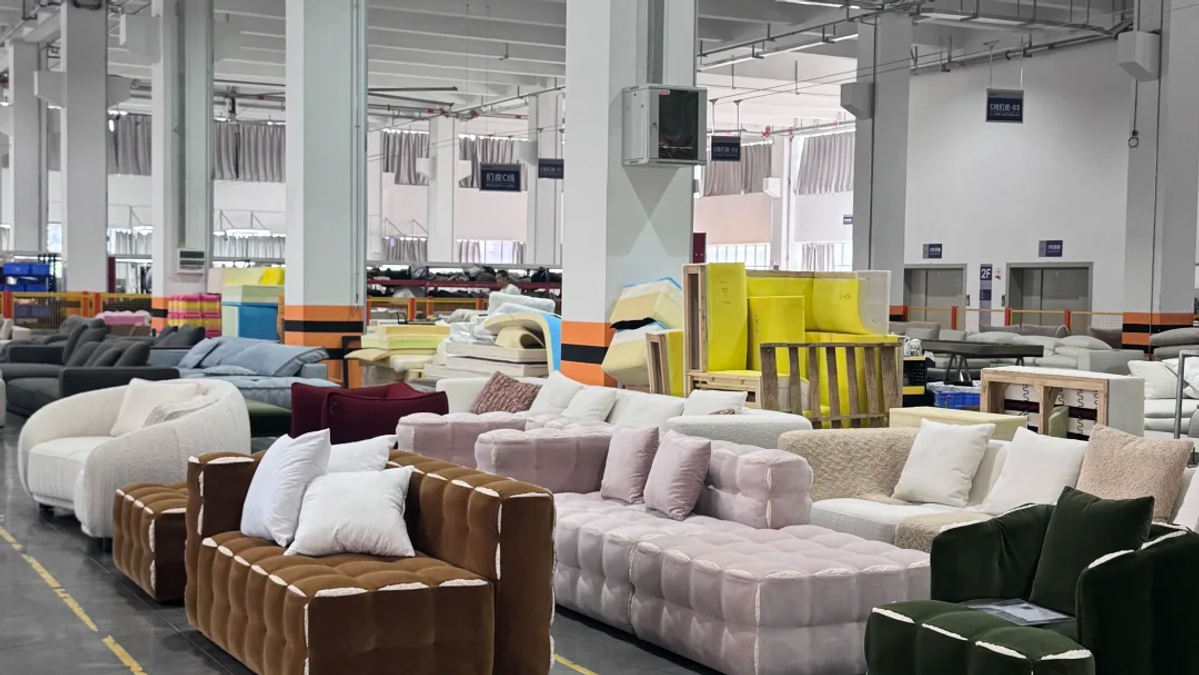
The Showroom Walk
After tea, you will usually be taken to the showroom first. This is where the factory displays its best work — finished pieces that look great under professional lighting. It is impressive, but it is also curated. Think of it as a restaurant menu photo: the real dish usually looks a bit different.
Here is what you should actually be doing in the showroom:
- Flip furniture over. Look at the joinery underneath. Is it glued and screwed, or just stapled? Are the corner blocks solid wood or particleboard?
- Open drawers and doors. Do they slide smoothly? Are the hinges rated for commercial use? Do the drawer bottoms feel flimsy?
- Press on surfaces. Run your fingernail across a finish. Does it scratch easily? Push down on a tabletop — does it flex?
- Ask about specific pieces. If you see something close to what you need, ask when it was made, who it was made for, and what the production volume was.
The showroom is your chance to get a feel for the factory's capabilities. But the real evaluation happens next.
The Production Floor
This is the part that surprises most first-time visitors. You walk through a set of double doors, and suddenly you are in the actual factory. The noise hits you first — saws, sanders, air compressors. Then the smell — wood dust, paint solvents, glue. It is loud, it is busy, and it is completely unglamorous.
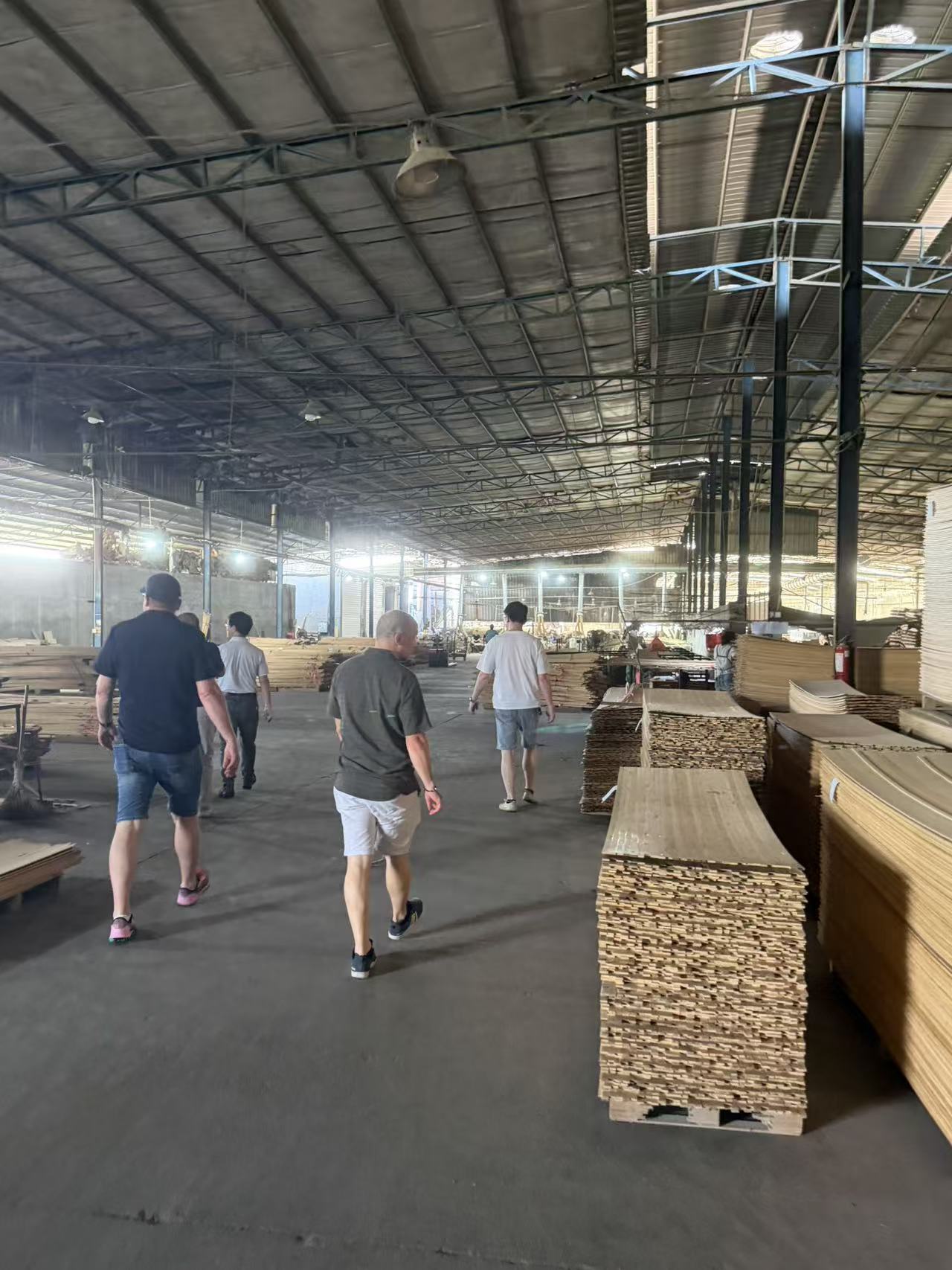
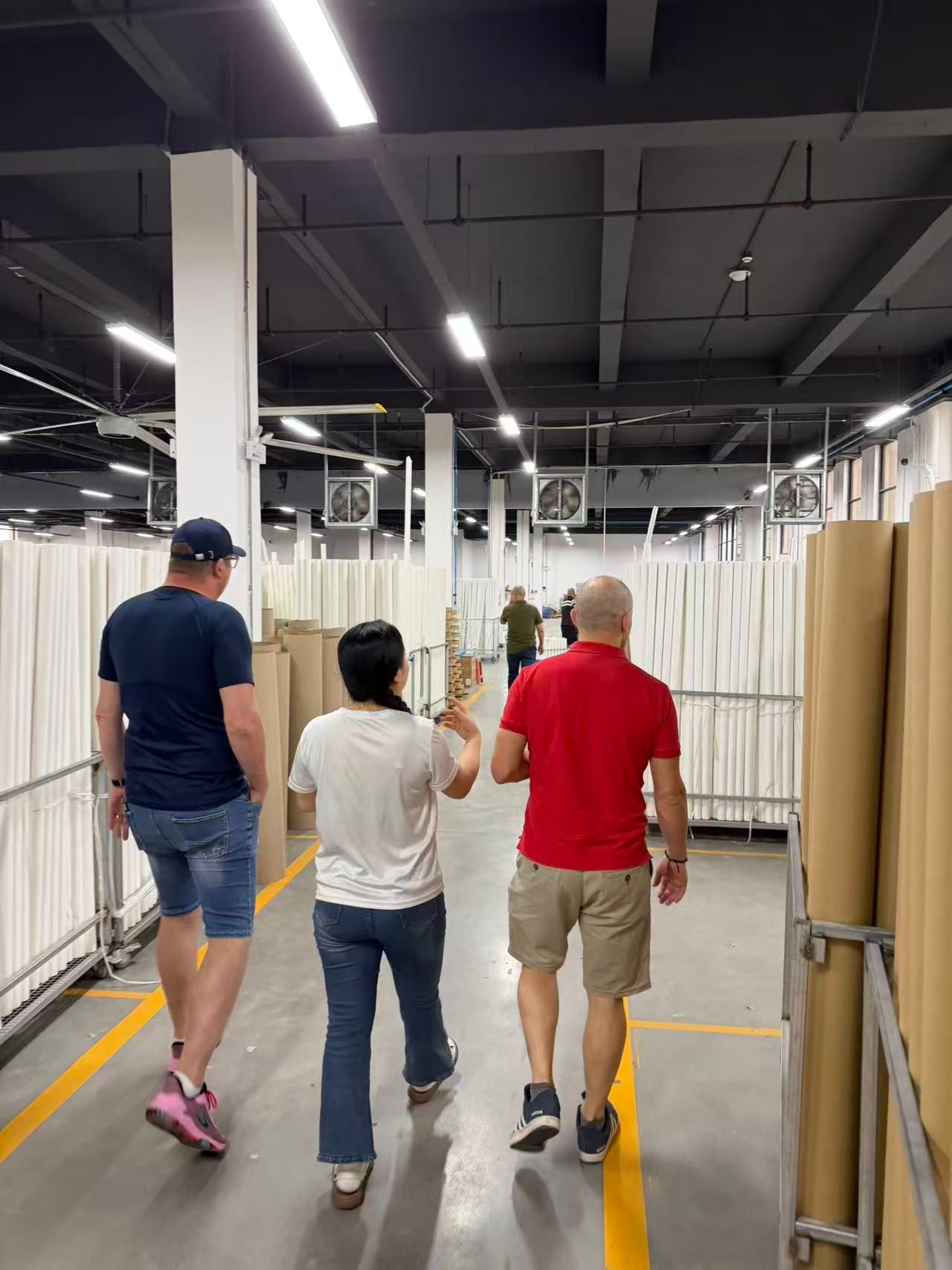
A typical furniture factory in China is divided into several zones. Here is what you will see and what you should be looking for in each one:
Woodworking Area
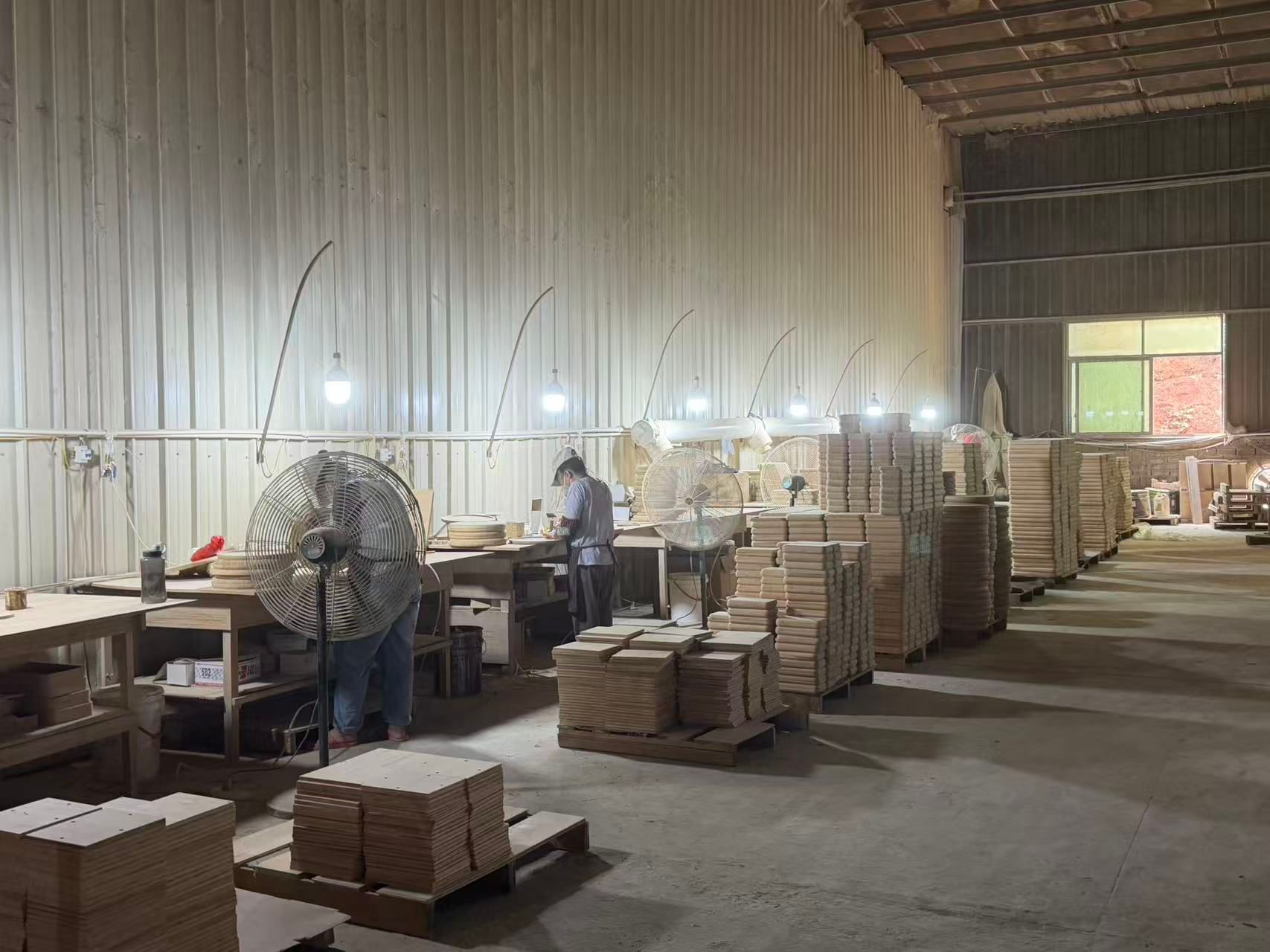
This is where raw lumber or panels get cut, shaped, and assembled. You will see CNC machines, table saws, and assembly benches. The key things to watch for:
- Material storage. Is the wood stored flat and dry? Wood stored outdoors or in damp conditions will warp. Good factories keep their raw materials in climate-controlled areas.
- Dust collection. A factory with good dust collection is a factory that invests in equipment and worker safety. If the floor is buried in sawdust, that tells you something about their standards.
- Assembly quality. Watch how workers put pieces together. Are they using jigs and fixtures for consistency, or eyeballing it? Are glue-up areas clean and organized?
Upholstery Area
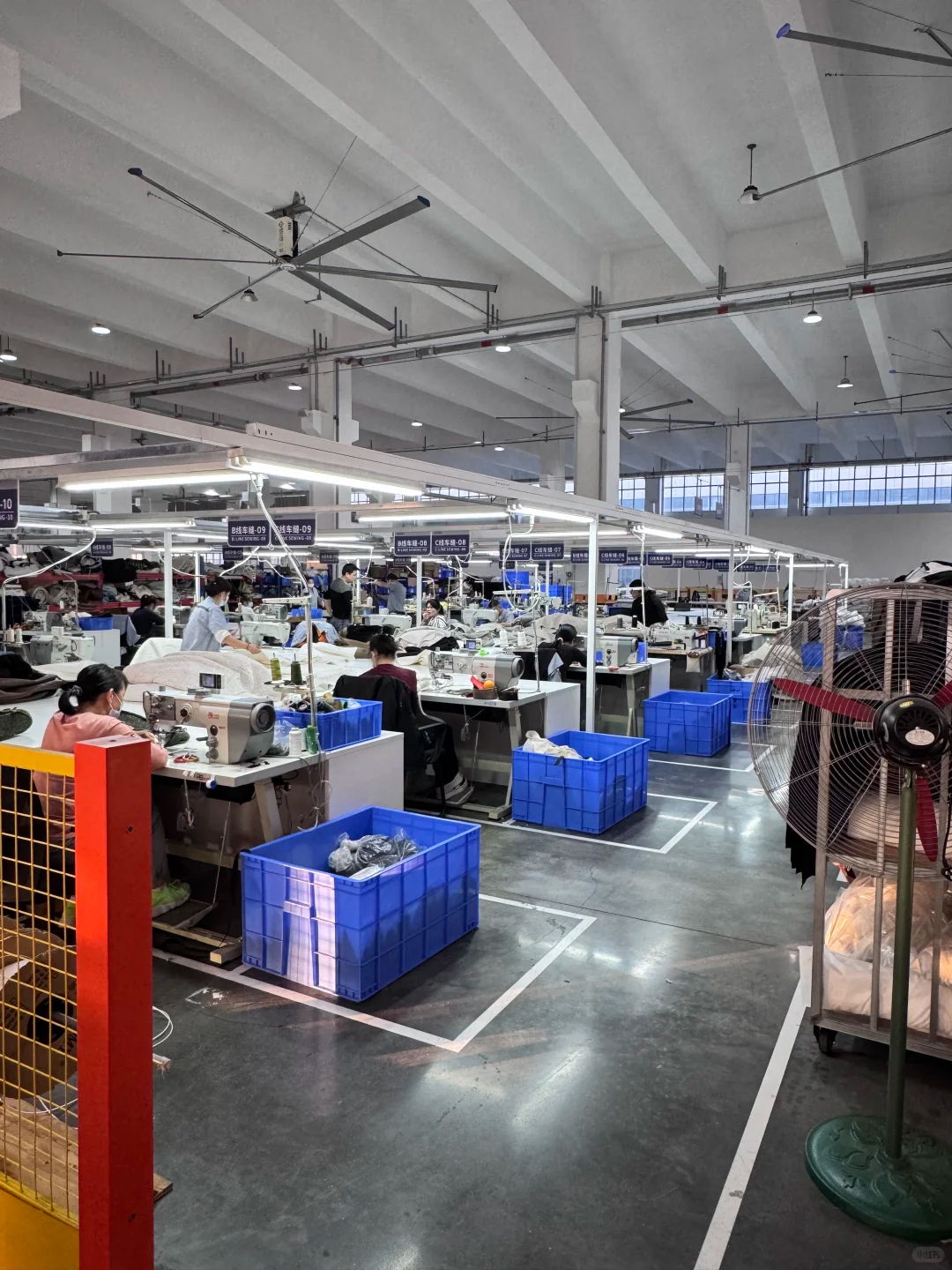
If the factory makes upholstered furniture, this section will have foam cutting tables, sewing machines, and stapling stations. For buyers sourcing hospitality FF&E, the upholstery area is where you can verify foam density, fabric stretching techniques, and stitching quality.
Look closely at the stapling. Sloppy upholstery work — uneven staples, loose fabric, crooked piping — is one of the most common quality issues in contract furniture. A well-run upholstery section will have neat workstations and workers who take pride in their craft.
Finishing Area
This is where furniture gets painted, stained, or laminated. Finishing is often the bottleneck in furniture production, and it is also where the most quality problems occur — runs, drips, orange peel, uneven color.
A good finishing area should have:
- A spray booth with proper ventilation (not just open-air spraying)
- Drying racks with adequate spacing between pieces
- Consistent lighting for color matching
- Temperature and humidity control
If the factory is spraying finishes in an open area with no booth, that is a red flag for both quality and environmental compliance.
Packing Area
The packing area does not sound exciting, but it matters more than you think. How furniture is packed determines whether it arrives at your project site in good condition or arrives scratched, dented, and useless. Look for:
- Corner protectors on all edges
- Bubble wrap or foam padding on vulnerable surfaces
- Sturdy cartons (not thin, flimsy boxes)
- Palletizing for larger items
- Clear labeling with PO numbers and item codes
The Questions That Actually Matter
During the tour, the sales manager will be showing you their best equipment and proudest achievements. That is fine. But the questions you ask will determine whether you get useful information or a sales pitch.
Here are the questions that cut through the marketing:
Question | What the Answer Tells You |
|---|---|
"What is your current capacity utilization?" | If they say 100%, they may not have room for your order. If they say 30%, they may be struggling. |
"Can you show me a recent production order for another client?" | This tells you what kind of work they actually do, not just what they claim to do. |
"What is your defect rate on finished goods?" | A factory that tracks defect rates cares about quality. One that says "we have no defects" is lying. |
"How do you handle rework?" | Every factory has defects. What matters is how they deal with them. |
"Who is your biggest client, and how long have you worked with them?" | Long-term relationships with reputable brands are the best signal of reliability. |
"What is your typical lead time for a first order vs. a repeat order?" | First orders always take longer due to sampling and setup. |
Tip: A factory that welcomes questions and answers honestly is usually a better partner than one that gets defensive. If they refuse to show you certain areas of the factory, or if they rush you through the production floor, trust your instincts.
The Lunch
If the visit goes well, you will probably be invited to lunch. This is not optional — it is part of the relationship-building process. The factory boss will take you to a local restaurant, order way too much food, and possibly bring out baijiu (Chinese rice liquor).
My advice: go with it. Some of the best business relationships I have built started over a plate of braised pork and a few shots of baijiu. You do not have to drink if you do not want to, but you should show up and be present. Lunch is where you learn things you will never hear in the meeting room — what the factory's real challenges are, what other buyers are doing, and how the owner thinks about the business.
After the Visit
The visit does not end when you leave the factory. The real work starts afterward. Within 24 hours, you should send a follow-up message summarizing what you discussed, what samples you need, and what the next steps are. This is also when you should schedule pre-shipment quality inspections if you decide to move forward with an order.
A factory visit is not a one-time event. The best sourcing relationships involve multiple visits — an initial visit to evaluate, a visit during production to check progress, and ideally a visit before shipment to sign off on quality. If you cannot be there in person every time, a professional sourcing agent can act as your eyes and ears on the ground.
Frequently Asked Questions
How long does a typical factory visit take?
A thorough factory visit takes 2 to 4 hours. You need time for the initial meeting, the showroom walk, the production floor tour, and a wrap-up discussion. If you add lunch, plan for 5 to 6 hours total. Rushing through a factory in 45 minutes tells you almost nothing.
Can I visit furniture factories in China without a sourcing agent?
Technically yes, but it is not easy. Many factories are in industrial areas that are hard to reach without a car. Sales managers often speak limited English. And without industry knowledge, it is hard to evaluate what you are seeing. Most independent buyers who visit factories on their own end up relying on a translator and missing important details. Working with a sourcing agent makes the process much more efficient.
How many factories should I visit before making a decision?
For a new product category, I recommend visiting at least 3 to 5 factories. This gives you a baseline for comparison. You will quickly see the difference between a well-run factory and a mediocre one once you have a few reference points. If you are sourcing something you have bought many times before, 2 to 3 visits may be enough.
What should I bring to a factory visit?
Comfortable closed-toe shoes (you will be walking on production floors), a notebook, a camera or phone for photos, a tape measure, and a list of questions. If you have product specifications or drawings, bring printed copies — digital files are hard to review while standing in a noisy factory.
What are the biggest red flags during a factory visit?
The biggest red flags are: being rushed through the production floor, being told certain areas are "off limits" without explanation, seeing finished goods stored outdoors, finding that the showroom products and the production line products are clearly different quality levels, and getting vague answers about quality control processes. Any factory that will not let you take photos is also worth questioning.
When is the best time to visit factories in China?
Avoid the weeks before and after Chinese New Year (late January to mid-February) — factories are either rushing to finish orders or completely shut down. October is also tricky because of the National Day holiday. The best times are March through June and September through early October. If you want to combine factory visits with a trade show, plan your trip around the Canton Fair or CIFF Guangzhou in spring or autumn.